

Latest Writings
Between Realms: Anything or Everything
My only published work as of 2026, Anything or Everything can be read as the very last story in the Between Realms anthology by Dragon Soul Press. Watch this video for more details: https://www.youtube.com/watch?v=Lcw37NREixA
Writing Update – June 2026
On my Youtube channel, you can watch this video where I talk about my current projects. I finished the first draft of My Life as a Sloth Dancer, wrote a short story called Wolves of Saturn, ad am planning to start a new novel in September. https://www.youtube.com/watch?v=9fk-mJbt03I
Pinyon/Juniper Forest Encroachment (Research Paper 2019)
PJ Forests: One Reason We Let Fires Burn
If you’ve ever driven through southern Utah then you’ve probably seen a pinyon juniper forest. These short trees are Pinyon and Juniper. The smaller shrubs between them are primarily sagebrush, but also include grasses, flowering plants (forbs), and other shrubs such as bitterbrush.
When I see the pictured landscape it makes me cringe. Not because it’s not pretty, I love trees and green landscapes, but because I know what’s probably happening to this hillside.
Let’s start with a little background on the forestry of the pictured habitat. Pinyon and juniper are native trees to Utah and much of the west, but many foresters and ecologists consider them an invasive species because they have taken over so much more rangeland than they previously occupied.
When Europeans arrived in the western U.S., they started to alter the landscape, as well as the climate. First of all, the increase in human activity has increased CO2 levels across the globe. Trees are much bigger than sagebrush, and so require more CO2. With more CO2 in the atmosphere, more trees can grow in a desert than before. Also, the global temperatures have increased, which results in milder winters, making it easier for young junipers to persist.
Second, cattle were introduced, and cattle eat a lot more grass than your garden variety desert mouse. Cattle don’t eat trees though, especially ones with hard, scaly leaves like juniper. Tree seedlings then may persist while competing grasses are eaten, as well as trampled by hundreds of hooves. So, cattle grazing results in less grass, and more trees.
Thirdly, fire. Historically juniper and pinyon were mostly located higher up on ridges, partly because they were periodically burned. However, with cattle reducing the amount of fine fuels (grasses) between the trees, so that if one tree catches on fire, it doesn’t easily spread to another tree because there’s nothing on the ground to carry it. Besides that, people don’t really like wildfires. Wildfires put irksome smoke in the air, make the landscape look less pretty, and threaten to destroy property. So, European settlers frequently put out fires, and juniper and pinyon trees spread, thanks to increased CO2, cattle grazing, and decreased wildfires (Coates et al., Madsen et al.)
At this point, you might be thinking, “So what? More trees are in the area, what’s wrong with that?” I love trees, but they cause problems when they aren’t in the right places. One of the biggest problems with an increased number of trees is the reduction of wildlife habitat. “But don’t more things live in trees than in scratchy bushes?” Not necessarily. Some species depend exclusively on sagebrush habitat. One prime example is the Greater Sage Grouse (Centrocercus urophasianus). If you’ve never heard of a sage grouse, look up a video of a lekking, it’s amazing to watch. Sage grouse are funny little birds, who make incredible sounds, like the sound of dripping water, with strange organs on their chest. Part of the grouse’s nesting, and their livelihood depends on sagebrush habitat. Not just small patches either, they need large expanses of sagebrush fields in order to find mates and raise chicks. Sage grouse populations are declining directly with the loss and fragmentation of their habitat.
For anyone who’s ever made a food web, you know what happens if a key species disappears from an ecosystem. For instance, if sage grouse go, then their predators such as the red-tailed hawk could likely also decline. Insect populations that the grouse eat could go up. These insects could then feed in greater number on plants, which are the basis of the food chain, and if the plants decline, then everything else does, and the system is greatly degraded. That might be a slightly exaggerated example, and an ecosystem has the potential to bounce back, but the point is that everything is connected. If one link suffers, it pulls down the whole system. (Coates et al.) And sage grouse are just one example of more than 350 species that depends on a particular habitat without invading pinyon and juniper (Madsen et al.)
Other problems are happening because of the spread of pinyon and juniper besides wildlife habitat destruction. In the picture at the beginning, sagebrush continued to grow between the trees. In the later stages of juniper and pinyon growth this is not the case anymore. In many places these trees have so dominated the landscape that smaller plants can no longer persist between them. Because of this, it is once again more difficult for the trees to spread fire from one to another, and they just keep spreading without being burned.
The missing grass also leads to an increase in erosion. Because of the lack of smaller plants with intricate root systems, it’s much easier for soils to be washed or blown away. Erosion can potentially cause landslides, and can strip away the fertile soil on the surface. If there aren’t softer, fertile soils on the top then grasses, forbs, and shrubs will have a very difficult time re-establishing themselves. (Tausch, Hood)
So the next question is, what are people doing to manage juniper and pinyon encroachment?
The summer of 2019 I spent several weeks on an internship in southern Utah. I spent a day with the manager who runs a lot of the habitat restoration projects. He told me about three main practices that they use to handle juniper and pinyon encroachment. The first one, and least invasive, is called Lop and Scatter. The manager hires crews to go out and chainsaw unwanted trees down and into pieces. The crews then leave the branches right there. The Lop and Scatter method may seem wasteful, but juniper wood is twisted, small, and not useful for much. Leaving the branches where they are cut then allows the moisture within the branches to stay and nourish other plants, which is especially needed in a dry desert system. A major downside to Lop and Scatter is that it takes a while, and is labor-intensive.
The second practice is called Chaining. Chaining involves attaching a massive chain, each link around two inches thick, between two bulldozers and pulling it along the ground to pull over larger plants like pinyons. Sometimes they also attach large metal bars to the chain, so that it also disturbs the ground. The problem with chaining is that it also destroys lots of other plants, which can cause erosion.
The third practice (which is the coolest to watch, I think), is called Bullhogging. A Bullhog is a large machine like an excavator with a giant motile woodchipper attached to the end of the arm. With a Bullhog we can target specific trees, and turn them into wood chips in a matter of seconds. The difficulty with bullhogging is that it’s hard to bring such a big machine into areas with rough terrain. (Miller et al.)
Prescribed fires can also be used to burn specific areas of woodland. Prescribed fires are less common because of the observed difficulties in burning juniper, and because legal permits are difficult to obtain.
After some of these treatments, especially if the understory was previously depleted, sagebrush and other plants may need a helping hand to once again establish themselves. So, one of the common practices is seeding. The problem is that most of the time the yield of seeds that germinate and sprout is much lower than the seeders want, especially because broadcasting seed can be expensive. A lot of research has been put into what kinds of seeds should be used, and how they should be dispersed. Rangeland ecologists are still debating the issue, with no real resolution yet.
The article by Brabec et. al. tested several different treatments to see if they helped with germination. Brabec et al. tried using herbicides to kill off other plants around so that sagebrush could grow without competition. They also tried pre-mowing the site, and several different ways of seeding. From what I could gather, none of these practices helped a whole lot, but they did find that local seeds fared better than ones grown further away. The majority of the seeds however, died within the first year.
A friend of mine, Matt Madsen, a professor at BYU, has done some studies on emerging technologies which could help in seed establishment. He and his team have done studies on the use of seed coatings to enhance growth and protect the seeds. They have also tested an agglomerate, which basically means that they put the seeds in clumps of magic to help them germinate and establish.
In his paper that I have referenced at the bottom, they used seed coatings to help with several difficulties. One challenge was that water may just run off the dirt, and so the seeds won’t have enough water to germinate. Another problem is that the dirt may have a hard crust, and so the plants won’t be able to break through it on their way up. But if the seeds are bound together in an agglomerate, then they have a much better chance of breaking through the crust. The team can also delay seed germination with a coating, so that they can plant in the fall, and the seeds will germinate in the spring. You might think that putting these coatings on the seeds would make it more expensive, but if you can increase your yield enough, it is more than worth the result, and you could actually end up spending less because you won’t have to plant again. The team did several other experiments, so if you want to know more, read the article! I have the citations below. (Madsen et al.)
I also recently heard that maybe a lot of the seeds haven’t been sprouting because most have been eaten by birds and more especially, small mammals. I couldn’t find an article about that, so maybe it’s time for you to do your own research. If you do find one, please get back to me and let me know.
I really hope you’ve learned something from this discussion, and I really hope you feel more informed about scientific discoveries and discussion! I get really excited when I know about some of the cutting-edge, emerging technologies, especially those used in environmental preservation. I also think that the marriage between technology and environmental care needs to happen more and more as time goes forward. Thanks for reading!
Annotated Bibliography
Brabec, M. M., Germino, M. J., Shinneman, D. J., Pilliod, D. S., Mcilroy, S. K., & Arkle, R. S. (2015). Challenges of Establishing Big Sagebrush (Artemisia tridentata) in Rangeland Restoration: Effects of Herbicide, Mowing, Whole-Community Seeding, and Sagebrush Seed Sources. Rangeland Ecology & Management, 68(5), 432–435. doi: 10.1016/j.rama.2015.07.001
A report on a certain experiment in which several different practices were evaluated as means of increasing the growth yield after planting big sagebrush for rangeland restoration purposes. None of the particular practices they tested were very successful, but that’s still good research because we know some things that don’t work great. I used it as an example of some of the experimentation that is going on to try and improve restoration practices.
Coates, P. S., Prochazka, B. G., Ricca, M. A., Gustafson, K. B., Ziegler, P., & Casazza, M. L. (2017). Pinyon and Juniper Encroachment into Sagebrush Ecosystems Impacts Distribution and Survival of Greater Sage-Grouse. Rangeland Ecology & Management, 70(1), 25–38. doi: 10.1016/j.rama.2016.09.001
This article was very useful, because it gave me a lot of background on Sage Grouse. The article evaluated effects of sagebrush habitat reduction and fragmentation of grouse populations. It is a prime and well-known example of how pinyon/juniper encroachment is detrimental to wildlife.
Madsen, M. D., Davies, K. W., Boyd, C. S., Kerby, J. D., & Svejcar, T. J. (2016). Emerging seed enhancement technologies for overcoming barriers to restoration. Restoration Ecology, 24. doi: 10.1111/rec.12332
A summary of findings related to various seeding practices in rangeland restoration, most of which involve different kinds of seed coatings. I discussed the findings in the article as a demonstration of continued experimentation to improve environmental field practices.
Miller, R. F., Bates, J. D., Svejcar, T. J., Pierson, F. B., & Eddleman, L. E. (2005). Biology, ecology, and management of western juniper (Juniperus occidentalis). Corvallis, Or.: Agricultural Experiment Station, Oregon State University.
This book was incredibly useful as a resource for my findings. It is a thorough investigation of the history of juniper (even from thousands of years ago), to present practices to keep them in check. I used it primarily in the first part of my article as a reference for the history of juniper encroachment, as well as a resource for impacts of fire and cattle. Also somewhat to read about current management practices.
Tausch, R. J., & Hood, S. (n.d.). Pinyon/Juniper Woodlands. Retrieved from https://www.fs.fed.us/rm/pubs/rmrs_gtr202/rmrs_gtr202_057_071.pdf
My personal experience was mostly on the local, practice-based scale, this article gives a much broader, large-scale view of ecosystem changes. It is also very informative on transitional states from sagebrush rangeland to juniper/pinyon woodland. I used it as a resource for some of the negative impacts on the ecosystem that pinyon/juniper woodlands have.
A Review of Antlers (Research Paper 2018)
A Brief Review of the Evolution of Cervid Antlers
I. Antler morphology and diversity
Many species of animals use hard projections on their heads for defense, hunting, mating competition, etc. The different kinds of projections can best be defined under the categories of tusks, horns, and antlers. Tusks are made from enlarged teeth. Tusks are often white in color, and generally point downward, but occasionally point forward, such as in the narwal. Horns and antlers are a little more difficult to distinguish. Horns appear in many diverse species, from insects to large mammals and lizards. At least in vertebrates, horns are made of keratinous materials, similar to hair, or human fingernails. Antlers, as opposed to horns, are made of bone material. They are also shed on a regular basis, usually on an annual timescale. The only time a bone projection is considered a horn is the pronghorn of North America and its ancestors. True to their names, pronghorns have horns, not antlers, but part of the horn (called the sheath) is shed every year like antlers.
Antlers and horns also differ in other aspects. Horns grow from the base. Antlers however grow from the tips, like a tree does. The only known organisms to ever have possessed antlers as we have defined them is the family Cervidae, the deer family. Deer are found throughout the Americas, and Eurasia, but are absent, or nearly absent, in Africa and Australia. Antelope and gazelle may look similar to deer, but they have horns and are part of a different family. Some deer also possess tusks. The Musk deer (Moschus moschiferus), has tusks, but completely lacks antlers. Another distinguishing feature of antlers is that they shed their “velvet”. When antlers begin to grow, they have a small fuzzy layer of skin called the “velvet”, which later dies and falls off in pieces. Horns have either no fur, or a permanent furry covering, such as in giraffes. (Goss)
II. Modern antler investigations
Biomechanics
Now that antlers have been defined, and differentiated from horns and other appendages, the mechanics and evolution of antlers can be examined. Modern investigations into antler evolution often deal with specific phylogenies, and with the conditions that favored antlers in the beginning, based on fossils. In nearly all Cervidae species, antler growth is a sexual characteristic, only appearing in males. The exception to a male-only antler characteristic is reindeer and caribou, in which antlers appear in both species. The previously mentioned musk deer is also an exception because neither males nor females have antlers.
Although antlers are shed each year, a small outgrowth on the skull remains, which is called the pedicle. Pedicles are the fastest growing bones currently known. The famous “Irish Elk” grew antlers with a span up to 12 feet in a single year (Gould). The mechanics of antler growth are developed to fulfill their primary purpose, which is for male-male competition and display during the mating season. (Landete-Castillejos)
Physical limitations
The Irish Elk, Megaloceros, had the largest recorded antlers of any deer to date. Megaloceros was not alone in the giant antler trend. Many other specimens, including those alive today of moose, wapiti, fallow deer, and more have very large, spectacular antlers. The marvelous antlers beg the question: how big can antlers be?
A study done by Francisco Ceacero attempted to answer the question above. Ceacero found antler length is linearly correlated to head and body length. Antler weight has a quadratic relationship with body mass. Investment in antler mass relative to skeletal mass also has a quadratic relationship with shoulder height. Exceptions always exist which fall below and above the trend line, but these are the general trends for extant species. For example, according to the trend line, a cervid with a head-body length of 200 cm would have antlers around 80 cm across. A deer that weighs 200Kg would have antlers that weigh around 7000g. If a deer had a shoulder height of 150cm, it would invest around 600g per kg of skeleton in antler mass.
Now these measurements show the general trend in living deer, but do not necessarily show the limits of antler growth. The growth of an antler is limited by food availability, and by the amount already invested in the rest of the skeleton. It would also be a mistake to assume that deer necessarily grow the largest antlers possible, although that certainly seems to be advantageous. Since antlers are used to out-compete other males, the larger the antler the more of an advantage, and if the display is impressive enough to scare away competitors without actual combat, all the better. But there are of course constraints in regards to feasibility, and predation. (Ceacero)
Evolution without predators
Geer recently published a case study of Pleistocene dwarf deer on the island of Crete, where they had next to no natural predators. The size of antlers is limited, as has been stated before by the availability of nutrients and food, as well as by the population density (because of its influence on food resources). But on the island of Crete, it appears that resources were plentiful, and predation did not affect the deer. The two main results of this bounty of resources and lack of predators resulted in larger and more variable antlers. Some of the deer grew shorter antlers with more branching. Others grew extremely long antlers, nearly the length of their body, with almost no branching at all. The fact that these antlers existed without any branching is a clear indication that showiness has a substantial impact on mating success. A single branch of antler would not be useful for fighting, and was likely useful more for intimidation and demonstration. (Geer)
Evolution with hunting
In contrast, what happens to antler size when heavy hunting is present? The literature hypothesizes trophy hunting for animals with large antlers or horns could begin to decrease the average size of said headgear in the population. However, this hypothesis has only been documented in a few species of Bovidae (cloven-hoofed animals, not Cervidae), and only one study had indicated a genetic effect. Many changes have to occur in order for hunting to evolutionarily decrease the size of antlers or horns. The hunting must be persistent and intense for years, occurring over a large area without immigration from unaffected populations of the same species. Trophy individuals must also be removed before they have had the chance to breed. All of these factors rarely occur at once, so other environmental factors which could decrease headgear size should be considered. Evolution due to hunting could be affecting the size of head weapons, but it could also be limited by resource availability, population density, etc., as was mentioned above. (Festa-Bianchet)
Bony labyrinth
One promising element, which can be used to help determine relationships and phylogenies between extinct and living deer, is bony labyrinth morphology. The bony labyrinth is the intricate set of cavities within the inner ear of mammalian species. Because it is so small and variable between species, by analyzing its shape through modern 3d sensing, one can determine how closely related species might be by calculating the similarity in the shape of their bony labyrinth.
Mennecart et al. recently did just such an analysis on 29 different species of deer, both living and extinct. Mennecart et al.’s study was particularly useful in determining relationships between certain deer species, and some of the time periods in which certain groups originated. One example is they provided evidence that Megaloceros is closely related to modern fallow deer. (Mennecart)
III Conclusion
Antlers have been specifically developed for male-male combat and display to compete for mates, and as such have developed into large, extravagant outgrowths. They are physically limited, but without pressure from predation and limited resources they can grow to very extreme lengths and sizes. Modern deer hunting may potentially have an impact on the size of antlers as well, but only under very specific conditions, and other limitations should be considered before attributing the change to evolution. Modern technology, including bony labyrinth morphology, can be used to further cement modern deer phylogenies.
Further studies into Cervidae antlers can determine their origin, and perhaps aid in their conservation. Especially since Cervids are so heavily sought after by hunters, it is essential to understand the evolution of antlers if people want to continue to preserve and have a permanent relationship with these amazing animals.
Works cited
Ceacero, F. (2015). Long or Heavy? Physiological Constraints in the Evolution of Antlers. Journal of Mammalian Evolution, 23(2), 209–216. doi: 10.1007/s10914-015-9310-0
Festa-Bianchet, M., & Mysterud, A. (2018). Hunting and evolution: theory, evidence, and unknowns. Journal of Mammalogy, 99(6), 1281–1292. doi: 10.1093/jmammal/gyy138
Geer, A. V. D. (2018). Uniformity in variety: Antler morphology and evolution in a predator-free environment. Palaeontologia Electronica, 1–31. doi: 10.26879/834
Goss, R. J. (1983). Deer antlers: regeneration, function, and evolution. New York: Academic
Press.
Gould, S. J. (1987). 21. The Misnamed, Mistreated, and Misunderstood Irish Elk. The Natural History Reader in Evolution, 171–178. doi: 10.7312/eldr92092-029
Landete-Castillejos, T., Kierdorf, H., Gomes, S., Luna, S., Garcia, A. J., Cappelli, J., … Kierdorf, U. (2019). Antlers – Evolution, development, structure, composition, and biomechanics of an outstanding type of bone. Bone, 128. doi: https://doi.org/10.1016/j.bone.2019.115046
Mennecart, B., Demiguel, D., Bibi, F., Rössner, G. E., Métais, G., Neenan, J. M., … Costeur, L. (2017). Bony labyrinth morphology clarifies the origin and evolution of deer. Scientific Reports, 7(1). doi: 10.1038/s41598-017-12848-9
I wrote this paper for my evolutionary biology class in college. Looking back on it, I don’t think I put as much effort into it as I could have, the organization of the paper doesn’t flow very well, and it’s not very focused. I mostly just summarized a couple papers and a book. But I still remember some of what I read, and I enjoyed doing the research. I still love moose, and they’ve shown up in my books.
The Slaying of Satan (Creative Pastiche 2018)
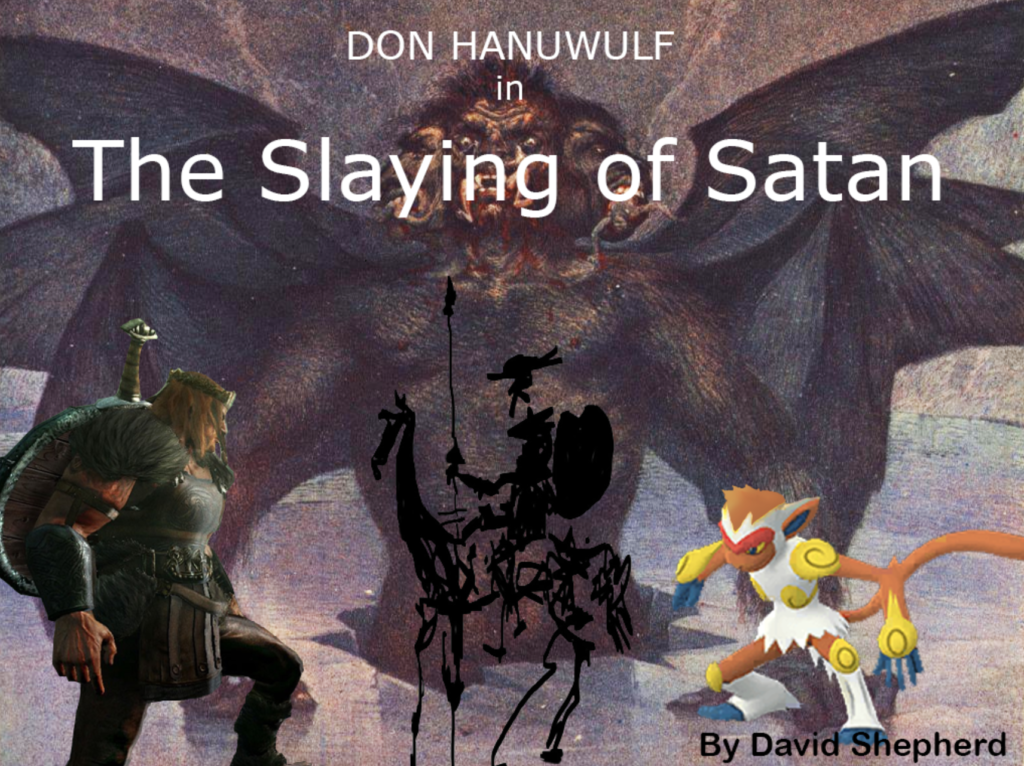
The three heroes stepped out, panting onto the frozen waters of Cocytus, the lake at the bottom of hell. The clip-clop of Rocinante’s hooves shattered the silence at the center of the earth. The horse had shown remarkable bravery in the face of the previous peril, and none of the three warriors quite understood how it had gotten past the giants, but here they were. Beowulf scowled at the faces of the frozen damned, trapped up to their necks in the ice. He held his sword tight in his hand, shield on the other arm as they neared their ultimate prize.
Hanuman followed close behind the other two, the wind beginning to ruffle his fur.
Don Quixote scanned the lake ahead, anxious to reach the center, he urged Rocinante onward. Sancho Panza stuck close by his knight. Unfortunately for him, his donkey had not made it past the fifth circle of hell and he had been forced to walk, a fact that he hadn’t allowed the others to forget. He put his bow back in the quiver and rubbed his hands.
“It is quite cold down here your grace! Before I thought the heat would burn me to a crisp, but now I fear I will end up a solid block of ice!”
“There is no warmth to be had in the presence of the Prince of Darkness my simple friend.” Don Quixote responded. “But soon we will rid the world of his warmth-stealing eye!”
Having fought their way past each and every beast they faced, killed the leopard, the lion, and the wolf, slain hundreds of Demons of the most foul varieties, and fought their way through the giants to the very deepest circle of the infernal pit, they finally arrived at the final object of their quest. Satan, in all his terrible, dark glory stood in the very center of the frozen lake, his feet trapped in the ice. His muscled legs rose from the ground, shaggy with matted hair. Blood dripped down his bare chest from the three people which he constantly crunched in his teeth, one for each face. Judas in the center, Brutus and Cassius on either side. His six eyes seemed not to even notice the three warriors approaching, they seemed to be glazed over with anger, and the effort of beating his enormous bat-like wings. Those enormous wings created a wind which blew throughout all of hell, and up close, it was difficult to stand straight up.
Beowulf surveyed their foe, searching for weak spots. “How shall the demon king be defeated? I have heard of his awesome strength and great evil, but our strength will be a match for him. If God be with us in our quest then my sword will sever the beast’s mighty legs this day. He will be brought down to the ice, and his leg-pillars broken. If you, Hanuman may make a mighty leap to attack Satan’s face he will have no chance to retaliate until he is brought low to the world-pit floor. If it so be that we are vanquished in the attempt, our blood will run with that of the tortured sinners of hell, the world will remain captive of Satan’s gruesome grasp. If it so be I pray that my body fall through the pit at Satan’s feet that I may rest on the shores of purgatory and not in this torture-pit. Quixote, the reach of your lance will skewer the belly of the beast, and the blood of his captives which he has eaten will bolter the surface of Cocytus. Satan’s tortured soul will scrithan at our feet for mercy but he will receive the mercy he has given and will be defeated.”
Hanuman nodded, “Of course I can jump that height! With the push of my legs I can leap to the top of this demon pit. With the hit of my fist Satan’s head shall off his shoulders. Great blood shall run from his eyes. I can smash this ice with my arms and make Satan fall into it. Together we shall break Satan’s back into small pieces! Forgive my discourtesy and rudeness, the legs of Satan are strong, his wings are stronger! You, mighty king, shall make Satan fall down by cutting his wings before his legs, and he will not be able to escape from us.”
Don Quixote shook his lance in the air. “Come brave knights! We must free those men from the jaws of the demon!”
Beowulf and Hanuman stared at him. At this point they were starting to realize that this man was not always there, and perhaps had not battled all of the giants he claimed to have vanquished.
“I think I will remain here”, Sancho interjected. “I will see what work I can do with this bow. I think I preferred fighting windmills and sheep to demons.”
Beowulf regarded the squire incredulously, “Windmills and sheep? Why would anyone have need to fight those? Sheep are good for eating and clothing, and windmills-”
Before Beowulf could give another speech about the things that were worthy opponents which he had conquered, Don Quixote yelled a challenge and spurred his horse forward, lance at the ready. “Meet your match foul creature! No more will you torment the souls of these knights!”
Satan kept on chewing.
“No your grace!” Yelled Sancho, but it was too late.
The adrenaline of battle filled Beowulf and he leaped into the fight.
Don Quixote’s lance miraculously hit its mark, not quite reaching Satan’s gut but burying its tip in his thigh. Satan made a garbled scream. Hanuman made a mighty leap, landing on the demon prince’s shoulder, and began pummeling the face which held Brutus in its mouth. At the same time, Sancho drew back an arrow and, concerned for his master, fired straight at the center face, the one chewing up Judas. By a miracle of Providence the arrow struck straight into his left eye. Satan screamed, traitor’s blood spraying into the air as he reached up with both enormous arms to cover his wound. Hanuman was nearly thrown to the surface of the lake, but managed to keep his footing.
Beowulf took advantage of the beast’s distraction and with a mighty leap, swung his sword downward with all his strength and severed in a single stroke one of Satan’s wings. As Satan tilted his head back in agony Sancho fired off another arrow, again striking right where it counted: directly into Satan’s throat. Judas’ leg fell from his mouth. He started to sway. His arms and remaining wing went limp. Hanuman leaped from his shoulder back to the ice. Beowulf backed away. Quixote was struggling in vain to pull his lance out of Satan’s leg.
“Back away your grace! You’ll be crushed!” Sancho cried out.
For once he did the sensible thing and left his lance there, turning Rocinante about just as Satan’s knees buckled. His feet still trapped in the ice, he fell backwards slowly. As he thudded unto the ice it cracked, the sound echoing through all of hell. His limp arms bounced against the lake. Fortunately for the heroes, the lake was frozen all the way through, and so the cracked ice did not cause them to fall in.
“I have brought down the mighty prince of lies! All of your names will be listed beside mine in the book of history!” Don Quixote boasted, gesturing grandly at the others.
Beowulf put his hand on Sancho Panza’s shoulder. “I confess that was much easier than I anticipated. I have slain whale-beasts and torn apart armies of demons which retaliated more than the Son of the Morning. However brave soldier, do not boast above that which you are able to claim. Let it be remembered that it was the strength of Sancho Panza’s bow which truly slayed the beast-”
“Of course!” the Knight said suddenly. “My squire has made a shot to rival that of David facing Goliath! You have learned well my young apprentice.”
Before any of them could retort, a wretched sound came from the ice of the lake. All around them, hundreds of people were crawling out of the cracked ice of the Cocytus. As they emerged all eyes turned towards the heroes standing at the feet of Satan’s monstrous corpse. A man already with blood on his face looked at them hungrily.
Sancho muttered under his breath, “The prisoners have been set free…”
Beowulf looked around apprehensively, gripping his sword tighter. “This may not have been the wisest choice. Our feat of valor well-intentioned may yet have unforeseen results.…”
This story was a lot of fun to write. I did it for my world literature class which covered up until 1500. Great class, with a great teacher. In the story, Beowulf, Don Quixote, and Hanuman (which were all stories we read in the class) slay satan from Dante’s: Inferno. For the battle itself, we actually played it out as a DND battle with some of my friends. Satan was represented by a Balor, Beowulf and Don Quixote were paladins, and Hanuman a monk, all of them high-level. But combat takes a long time at high levels, so to speed things up, the DM gave Sancho Panza a war bow with arrows of slaying. So with his first shot, he took Satan out. Hanuman in the cover art was probably the least faithful bit, I photoshopped him from Infernape the pokémon. It was also fun to try and imitate the way the characters talked, because Beowulf and Hanuman both speak in long boastful speeches, which is very different from the way I usually write.
Reaching for Release (Poem 2017)
Reaching for Release
Ragged hair falls in
curls, unkempt and polluted
Discordant
notes sandpaper my air and fingertips
Frayed jeans, frayed
dreams
My fingers pick at
shredded cords in my throat
My eyes squint
tight
against the darkness
Frantic beats pound
out the rhythm of my helpless heart
Why do you shun me?!
Do I make you feel uncomfortable?
Can’t you see,
I’m reaching out for attention!
I’m crying out for release help me.
I wrote this for my Creative Writing class in college, which was super helpful. This is the version I wrote after getting feedback. In one of our first classes, we listened to a scream-o type song, and I wrote this poem in response to that song, and people’s negative response to it. This is of course not the first version, but the version I wrote after getting a lot of criticism for the first version. I still think this needs some work with the word choice, and some of the line breaks, especially in the second half. Being the cocky kid that I was, I volunteered to share first, because I thought my writing was naturally incredible and no one who have much of anything negative to say. Receiving feedback was a humbling experience and I am grateful for it. This poem also reflects some of my own feelings from high school. I often wore torn jeans (torn the natural way, not bought like that), and listened to music many would consider harsh. I often felt alone and angry, and the music I listened to was some way to express what I was feeling. I acknowledge now that a lot of my misery was self-inflicted, and I should have reached out for help sooner than I did. If someone had asked, as my mom often did, I lied and said I was fine and continued to pretend otherwise. This poem I think reflects a lot of the desperation I felt.
As a Dumb Dromio (Analytical Essay 2016)
As a Dumb Dromio
In the late 16th century the sale and trade of African natives for use in slave labor was still taking off. The first recorded Englishman reported to have participated in African slave trade was Sir John Hopkins in 1562, only two years before the birth of playwright William Shakespeare. By the time he wrote his first play, The Comedy of Errors, in 1594, it seems likely that slavery was a hot topic in England as the industry grew. In The Comedy of Errors Shakespeare uses the metaphor of an ass to show the inhumanity of slavery and servitude.
Shakespeare sets the stage for this discussion in the second act, scene 1 as Luciana and Adriana discuss the failure of Antipholus to return home for dinner. Luciana states to her sister that Antipholus is “the bridle of her will”, however Adriana contends that “none but asses will be bridled so” (13-14). Shakespeare is stating here that only asses are bridled and commanded by people. This makes a bold statement in comparing the way many treated other people, especially slaves, to the way one would treat a dumb ass, which is used, much like a slave, as property and a beast of burden.
In act two scene two the comparison first comes up of Dromio to an ass. Luciana states that Dromio of Syracuse has been changed to an ass, and he heartily agrees, stating that he “long[s] for grass/ ‘Tis so I am an ass” (198-200). The comparison of an ass to a servant or slave is now here used as applied directly to Dromio to show that he is driven and controlled by others. Even so he states that he longs for grass, as an ass longs to feed in the grass of the pasture, so Dromio longs for freedom. However, he is held at the mercy of his masters to be driven and bridled as they see fit.
In act three scene one the comparison is used again by Antipholus and Dromio of Ephesus. Antipholus states in anger that he thinks Dromio to be an ass, to which Dromio responds in the affirmative that “so it doth appear/ By the wrongs I suffer and the blows I bear/ I should kick, being kicked, and being at that pass/ You would keep from my heels and beware of an ass” (16-18). Dromio now puts forth another similarity, that he is beaten as an ass. However, he states an interesting warning as well. An ass possesses a very strong back kick, to which Dromio warns Antipholus may come back to hurt him if he continues to beat the ass. Shakespeare is making an interesting perspective here, that if slaves continue to be treated the way they are, there will eventually be painful consequences for their masters. He is also perhaps offering a warning to slave owners to watch their back, keeping far from the heels of the ass.
A short time later in the same scene, act three scene one, an interesting twist occurs as Dromio of Ephesus refers to both himself and his twin brother saying that as Dromio of Syracuse takes the place of Dromio of Ephesus he changes his “name for an ass” (47). In every instance where one of the Dromios is referred to as an ass it is stated or agreed upon by themselves. This offers an interesting statement on the moral placement of servants and slaves. Through the way they are treated they begin to accept the role placed upon them and regard themselves in the same way they are treated by their masters, as asses.
In act three scene two Dromio of Syracuse again refers to himself saying that “I am an ass, I am a woman’s man” (77). Here, Dromio is referring not to his master, but to a woman who thinks she is romantically involved with him. Thus Shakespeare is making a much different commentary than that of slavery, but that of domineering figures in relationships. Often one individual in a couple seeks to control the other, which Shakespeare here compares to treating them as an ass. However, it is interesting to note that the comparison is made with the same character, Dromio, to show again one person being dominated by another.
The last instance occurs in act four scene four and is again Antipholus and Dromio of Ephesus referring to Dromio of Ephesus. Antipholus states that Dromio is “sensible in nothing but blows, and so is an ass”, to which Dromio replies “I am an ass, indeed; you may prove it by my long ears” (27-30). Here Antipholus dumbs down Dromio, stating that the only thing he understands are blows, the same way one would beat an ass to teach it to obey. Dromio agrees to the statement that he is an ass by the way he is treated, and for his long ears. Here Dromio uses a pun, saying that he is an ass for having stayed with his master these long years. In every instance where Dromio is accused of being an ass he responds with a clever comparison, namely long ears, longing for grass, and kicking with his heels. This is used by Shakespeare to show the contrast between the way Dromio is treated, often as a dumb animal, and his actual intelligence and cleverness. In this way Shakespeare is stating that despite the way slaves and servants may be treated, they are often much more intelligent than they are given credit for, and that any dumbness is not inherent, but is put upon them by society and their masters.
In Comedy of Errors Shakespeare often compares the two Dromios to asses to show their state of servitude. He portrays them as much cleverer than the other characters treat them, and makes several parallels between slaves and asses to show the wrongs involved in the common practices of treatment of slaves and servants.
I wrote this essay for my Writing 150 course (a basic writing class at BYU) as an analysis of Shakespeare’s Comedy of Errors. I’m particularly proud of this piece, because afterwards the professor (who I admire very much) pulled me aside and said something like: “I don’t agree with you, but you supported it.”
Bilbo’s Encounter With Charon (Analytical Essay 2016)
Bilbo’s Encounter With Charon
In ancient Greek mythology the Underworld is the place where the souls of the dead are sent to be judged and dwell for the rest of eternity. The place is ruled and run by Hades, the brother of Zeus and Poseidon. The descent to the Underworld is dark and dreary, and the place is filled with fire and darkness, at least for those who did not earn their way into the paradise called Elysium. In mythology live several legends, heroes who managed to make their journey to the Underworld and return to the surface, still living, a journey which is called Katabasis. Among these heroes are Orpheus, Heracles, Odysseus, Aeneas, Demeter, Dionysus, and Bilbo Baggins.
This Katabasis is a key element in Joseph Campbell’s description of a hero’s journey. He says that at one point the hero descends into “the belly of a whale”, and reemerges, symbolizing leaving the mother’s womb in a rebirth. In his novel The Hobbit, Tolkien uses parallels to Greek mythology to show Bilbo’s Katabasis and rebirth as he descends into the mountain and encounters Gollum.
Before Bilbo encounters Gollum he and his company descend into the earth from a mountain cave. As they are captured and escape from the goblins they continue to descend (60-65). This directly parallels to the Greek Underworld which is far beneath the earth. Bilbo, like the dead, made a long and dark journey downward to an unknown realm. This is also consistent with Joseph Campbell’s hero model, which includes a descent into an abyss, often called the belly of the whale. In this case it is represented by the earth, and is the belly of a mountain.
The Underworld model is supported by the moment when Bilbo is forced to part from the others. He is knocked unconscious by a goblin and after an undetermined amount of time “opened his eyes” to complete darkness (68). Bilbo’s death, or journey to the underworld, is represented by this circumstance. Bilbo did not simply walk down, he fell against his will, lost consciousness, and awoke to complete darkness. All of these are similar representations of death and awakening in another place, namely the realm of Hades, and are used to further demonstrate that Bilbo is undergoing a transformation. A transformation which a rebirth, a descent into the belly of the mountain, and a return journey to the surface, all of which are characteristic of the hero with a thousand faces.
Bilbo then encounters the ferryman of the underworld, known in the text as Gollum. He is described as slimy, with eyes that “burned with a pale flame” (83). This is also characteristic of Charon, who was the ferryman who carried all of the dead across a river into the Underworld. Charon was described as a filthy old man with eyes that burned like a furnace, for which the ferryman earned his name, which comes from the word for “keen eyes” in ancient greek. In this way Gollum is portrayed as a guardian of the way forward in the depths of the earth. Many of the great heroes of ancient Greece encountered Charon, who met all that entered the land of the dead. Thus Bilbo is compared to these same Greek heroes as he has very similar key experiences.
Gollum has various other resemblances to Charon, one of which is the boat he uses to travel across the lake on which he lives. Gollum paddled about quietly with his hands making “never a ripple” (71). Charon also used a boat which he used to ferry the dead across the river of pain called Acheron. Charon also, like Gollum, appeared quietly making no sound or ripples in the water. In this way Gollum is represented as a ferryman, or for Bilbo the way onward and out of the belly of the mountain. Gollum is one of the strongest similarities that The Hobbit shares with Greek mythology and the Underworld. Tolkien uses this representation to create a heritage for Bilbo consistent with the hero’s journey alongside the great heroes of Greek mythology, who also pass through a rebirth by entering and leaving the Underworld.
However, Gollum never kept his deal to guide Bilbo to the exit. Instead he accused Bilbo of stealing his ring and chased him down the tunnel (83). This is done to show that Bilbo never crossed to the land of the dead, but was able to escape alive. However, Bilbo becoming invisible after his encounter with Gollum may be considered a portrayal of him as a spirit who has passed into Hades’ realm. Either interpretation draws similarities between Bilbo’s journey through the mountain, and a Greek hero’s journey through the Underworld.
Charon required a fee of a single coin to ferry the dead across the river, which in the Hobbit is represented by the ring, which Gollum desires, but never receives (84). This may be presented as Bilbo’s failure to pay the fee, and he is thus denied the opportunity of Charon, or Gollum, guiding him to the way beyond. Thus Bilbo did not descend all the way down into hell, but reemerged, alive and reborn. The hero’s journey includes this descent and rebirth as a key turning point for any hero.
All of these references to Greek mythological tales are used to associate Bilbo with the ancient Greek heroes who also journeyed into the deep underworld and returned. Bilbo descends into the earth, he is knocked unconscious and awakes as if he has died, and Gollum shares many characteristics with Charon, a guardian of the entrance to the Underworld. In this way Bilbo undergoes a rebirth in the womb of the mountain’s belly and exits the cave as a new creature. Tolkien’s use of Greek imagery portrays Bilbo not as a silly child-like fool, dependant upon others and reluctant to take risks and places him on a pedestal, conquering evil alongside many of the greatest heroes in all of legend.
Harper’s Attempt (Narrative Essay 2016)
Harper’s Attempt
In 1859 a man named John Brown attempted to raid a federal arsenal in the eastern corner of West Virginia near the borders of Maryland and Virginia. His aim was to start a slave revolt, thinking that slaves and other abolitionists would rush to join him and his men to establish freedom through rebellion. However his attempt was unsuccessful, and he was hung for treason. The town he raided was called Harper’s Ferry, which sits on a corner of the riverbanks where the Potomac and Shenandoah rivers converge. That was where we were heading.
I had gone tubing down this section of the river once before on a boy scout trip, but today we were here for a different purpose. Where the rivers meet, on one side of the Potomac is the historic town of Harper’s Ferry; on the other side is a 150 foot cliff of ashy gray rock. Into its side is a carved square sign, like a plaque, too indistinct to read.
My excitement grew as we approached it. I’d never done a rappel that high before, and the view looked beautiful. My parents were along for the adventure, as well as my sisters, Nicki and Sarah, their husbands, Ben and Dustin, my nephew Conner (who was nearly two), and some friends, Dave and Nicole, who was six months pregnant.
We started the hike up to the top of the cliff. Dustin and I carried the cooler stuffed with food between us. The weather was clear, but hot. Trees rose high over the dirt trail, casting webs of shadows on our heads. As we climbed upward, the cooler became heavier. The hike was much longer than we had anticipated, taking more than an hour to reach our destination. My dad tied off the rope, and we started taking our turns to go down. The cliff was not sheer, it had several ledges and round rock formations making it a difficult rapel. Because of the length of the hike, each person would only be able to go down once, so we decided that I would be the last to rappel, and Dave and Ben would hike the supplies back down.
Many of us sat on the rocks and enjoyed the view, as well as the food. My dad made the rappel with my nephew Conner strapped in a carrier on his back. This made for some good pictures and was entertaining for all of us, but Conner was not as pleased. On the way down, his arm rubbed up against the rope, giving him a rope burn. Afterwards, we decided to tie up the cooler and send it down to those waiting below. Having a few eagle scouts among us, we tied it up as best we could and began lowering it down the cliff face. However, the cliff was not a straight shot to the ground, and the cooler bounced and flipped off the various ledges. As it came over one rock it flipped and the top busted open spilling our trash and leftovers all over the cliff. The cooler did make it all the way down though, it was just empty. As Sarah went down afterwards, she did her best to grab some of the spilled items but there was just too much and the trash was too scattered to make much difference.
As I sat and waited for my turn, I had ample time to examine my surroundings. The sun bore down into our skin like an open furnace. Several skinny blue lizards darted across the rocks. To my left across the Potomac lay a vast expanse of green forest, full of tall, Virginia oaks. Snaking off into the distance was the skinny Shenandoah river, disappearing between the woods on either side. To my right, the wide Potomac spilled across the landscape. My dad said that when he was a kid, they called it the “Pot o’ muck”, but that was an outdated reputation. The water was shallow, but clear and blue.
Two bridges spanned the Potomac from our side over to the small town, one for trains and one for cars. Crossing the rivers on both sides of the town were rows of stone pillars rising from the water. The remnants of old bridges, covered in foliage, and many of the carefully laid stones had fallen from their places.
Most prominent on the landscape, however, was the quaint little town that lay between the banks of both rivers. Many of the buildings were of brick, designed to resemble those of the 1800’s. The town’s historical significance had led to a prominent tourist industry. The spires of a Catholic church rose above the rest of the rooftops near the rivers’ convergence. Neatly ordered streets with slow-moving cars lay between the buildings.
Finally, I took control of the rope up top. There were only two of us left to go: Nicole, and then myself. Dave helped me strap her into the harness with the carabiner and the figure eight. When the moment came for her to make the descent, she became very nervous. She had never been rappelling before, was six months pregnant, and felt as though she had no other option than to go down. We were nearly out of water and dehydrated. She knew if she didn’t do the rappel, she’d have to make the long hike back down the trail. We tried walking her through it to calm her nerves.
“Just lean back like you’re sitting down and walk down the cliff.”
“Keep one hand behind your back, that will stop you from going down.”
“If you slip at all my dad is belaying at the bottom, he’ll stop you from falling.”
“And we’ll be here every step to talk you through it.”
“It’s easy.”
She looked worse than before.
I grabbed the rope and showed it to her. “Nicole, this rope can hold two thousand pounds, it will hold you. Trust it.”
Tears streamed from her eyes, and she started to hyperventilate. That was it. We helped her out of the harness, and her husband comforted her, giving her water and a quick priesthood blessing. Ben felt the need to help in some way, so he started running back down the trail to the rest of my family. I quickly packed up the rope and the rest of the gear. After everything was ready, the three of us- Nicole, Dave, and myself -started slowly working our way down the trail.
Dave and I were both very concerned for Nicole, and I wanted to make sure he wasn’t panicking too much. We drank what was left of our one water bottle and snacked on a bag of peaches and cucumber slices which helped with the thirst. We also found some wild raspberries along the trail’s edge which were small, but sweet. I’d read a book once that said if you sucked on a pebble it would help with your thirst, so I tried it. I don’t know if it really helped with the thirst, but it kept me occupied in some way. As we were nearing the bottom, Nicki and Dustin met us with two bottles filled with cold water, which was extremely refreshing.
Finally we were able to rejoin my family. My mom was thrilled. I took off my shoes and walked straight into the Potomac’s cool running waters, burying myself up to my neck. The water swirled around me, soaking through my jeans and t-shirt. I lay there, extremely grateful that things had not gone worse. It had been tense and scary at points, and we had all been worried, maybe even a little panicked, but we were all safe and together. I hadn’t gotten to do the rappel either, but that didn’t matter. The water washed away the dirt and sweat and I felt at peace. I felt even more at peace on the way home after downing a pork burrito from Cafe Rio.
Only You Can Let it Burn (Research Essay 2016)
Only You Can Let It Burn
In 1988 Yellowstone National Park in the United States caught fire. The wildfires burned for several months eventually becoming a threat to visitors areas. The fires started out as smaller, isolated incidents that combined into one, affecting 36% of the park, nearly 800,000 acres. The fire was initially allowed to let burn, being considered a natural occurrence and possibly a benefit to the productivity of the ecosystem in the future. However, it burned out of control, threatening national buildings and private properties. At one point more than 9,000 firefighters were assigned to Yellowstone, as well as many members of the U.S. military. Even with all their efforts the fires were only extinguished in late fall when colder, moister weather arrived. The expenses of fighting the fires totalled to 120 million dollars, not including property damage costs.
This dramatic incident led authorities and the people of the United States to reconsider the current policies concerning wildfires. Yellowstone is undoubtedly the most famous forest fire in modern U.S. history, however, wildfires occur in nature thousands of times each year by both natural causes, and because of the actions of people, and government policies in this regard have been debated for many years. Letting wildfires run their course can have some attractions and benefits. Some of these are environmental benefits of burning, long-term implications and results of fire prevention, national budget, and the impacts of human intervention on the environment.
Still, much effort is made to detect and put out forest fires, especially in government owned parks. Mostly because of the negative impacts of several large fires previously, government policy has promoted the extinguishing of nearly every forest fire. Many are employed by watching specific areas to report any fires sighted. Wildfires can begin in a variety of ways. The Yellowstone fire occurred partly because of drought. Other contributing factors may be accumulated dead trees, lightning, extreme heat, and any number of human-related activities.
Letting a fire burn applies only in wild areas, not in any area inhabited by people. Wildfires are never allowed to freely burn where there are residences. As such, the debate being considered mostly concerns the impact of such fires on the environment, and how they should be properly dealt with. Even though extinguishing all wildfires seems to be the right thing to do, letting many natural fires burn is beneficial for the environment to increase resistance to quick burning, and is part of the cycles nature has gone through for thousands of years.
Many downsides are of course apparent in letting wildfires burn. Kayla R. Phelps reminds us that “risk is an inescapable component of living with wildfire” (7). Wildfires can burn very hot, very fast, large, and long. They often pose a threat to public and private property, especially those that live near forested areas. This is one of the main concerns and dangers when wildfires are allowed to burn. In the past wildfires have caused the injury and death of many people, but mostly to property. Entire residencies and towns have been destroyed by wildfires. Fire is very destructive and dangerous and should be kept under careful control. If wildfires are allowed to spread they will undoubtedly come near to people and homes. But if fires were suppressed in the early stages it would be much less likely that they would damage human life or property.
Fighting wildfires is very expensive, and so the budget is an important factor to consider when deciding how to best deal with them. Stephen J. Pyne stated that from experience forest authorities had learned
“that it was far cheaper to hit fires when they were small than after they had become large. Attacking every fire, even smoking snags on talus slopes, avoided having to guess which such ignitions might, eventually and through unforeseen means, become problems. The expense of even a single large fire could be so exorbitant that it made the cumulative cost of suppressing many tiny ones trivial in comparison. If one could reach such fires, it was better to attack them than to trust to weather and luck.” (71)
Thus from a budget standpoint, it is much wiser and easier to extinguish any fire that is spotted, preventing them from becoming too large and difficult to put out. Large fires are much harder to control than small ones, and much more likely to damage property and become a threat to human life and safety. When a fire starts in a large forested area it can spread very quickly, and burn for a long time before going out naturally, especially during a dry period. Putting out small fires prevents the risk of them becoming large and out of control, which is incredibly difficult to predict, and often much less costly than putting out only those fires that become large and out of control.
In Wildland Fire Management: Additional Actions Required to Better Identify and Prioritize Lands Needing Fuels Reduction from the General Accounting Office, the downsides posed by wildfires are listed, stating that “fires and the resulting damage not only compromise the forest’s ability to provide timber, outdoor recreation, clean water, and other resources, but also pose increasingly grave risks to health, safety, and property” (1). A great many things are damaged by fires. As stated in the quote, a forest that has been burned can no longer provide valuable resources for industry and recreation, as well as posing risks to the health and safety of those nearby. Smoke poses a large threat to the health of any who inhale it. Property can be damaged or destroyed possibly harming people as well. A burned forest cannot provide timber for construction or the making of goods. It will not have clean drinking water, but water that is contaminated with dirt and ash. Hiking, camping, tourism, or visitation at all is inhibited, and a forest cannot be enjoyed when it is burned. Overall, wildfires damage and frustrate many things necessary and enjoyable for human life today.
Federal policy seems to support the suppression of wildfires, but Gregory Aplet argues that this is not the case. He states that due to gathered scientific evidence and societal opinion, “federal fire management policy strongly supports wilderness fire” (9-10). There seems to be a culture in the United States against wildfires. Smokey the Bear, the fires of 1910, and the Yellowstone fire of 1988 have all contributed to the idea that wildfires are bad and should always be prevented. Written federal policy however is mostly in support of letting wildfires burn, because this is what the evidence seems to support. Whether or not these policies are implemented the way that they are written is a different story, but there are many reasons that fires should be allowed to burn, some of which will be elaborated upon hereafter. People often look at wildfires in a very negative light, failing to recognize the potential benefits and natural cycles of fire that have occurred for centuries. Seeing a forest burnt, or animals that have been hurt because of fire is often very sad and discouraging, but emotions should not govern federal policy and the way the environment is treated. When the facts are presented strong evidence is shown in favor of letting many wildfires burn, especially in the long-term.
Fires have occurred as long as there has been fuel for them, and many ecosystems in the United States had become adapted to frequent burning and recovery. However, Jack Cohen explains that in many of these ecosystems, such as western ponderosa pine forests, frequent fire suppression has affected the condition of these forests. This practice has resulted in “significant changes to the species composition and increases in the amount of live and dead vegetation” (21-22). Also, within the vegetation the fuel content and arrangement has changed as the forests have become less adapted to frequent burning. These changes have actually increased the likelihood of intense forest fires within these regions (22). Human’s actions have untold impacts upon the environment which much be carefully considered whenever we seek to alter it in any way. Because of efforts to suppress wildfires the potential for these same fires to occur in more devastating ways has increased, and nature’s own defenses have been lowered. Fires have been happening for millions of years and haven’t destroyed life yet because nature has learned to preserve itself. It may seem odd to consider the environment this way, but it has its own ways of protecting itself and adapts to ensure the greatest chances of survival, each species for itself. However, if people assume the responsibility to fight nature’s battles for it it no longer needs these defenses and will not put forth the effort to produce them. If trees don’t burn very often, they will stop composing themselves of material that does not burn easily because it is not a threat, and so if that threat comes into play the trees will have no means of defense and will burn like matches.
Scott L. Stephens and Lawrence W. Ruth, both federally recognized graduates from the University of California, corroborate this statement saying that “the recent trajectory of wildland fire in the United States… reveals that the average annual area burned is increasing. Further, this increase is occurring despite a parallel rise in resources and funds utilized to manage fuels and suppress fire” (539). Even though the United States has continually increased the budget and resources expended to suppress wildfires, the area of wildland burned is also increasing. This could possibly be because people are becoming less aware and careful in preventing forest fires and are causing more of them each year. However, because of the many efforts made to educate on the prevention of forest fires and the safe use of materials in nature, this seems unlikely to be the cause. So if the activities and policies of people within the United States have been increasingly against forest fires, yet the impact of forest fires have increased, then it can strongly be suggested that it is the environment that is changing, gaining more and more potential for catching aflame. Therefore it must be considered that human suppression of forest fires has caused wildlands to become more susceptible to large-scale burning.
Stephen Arno and Carl Fiedler explained in more detail, stating that the “suppression of fires for nearly a century and logging of fire-resistant old growth trees spawned an overcrowded growth of smaller trees vulnerable to intense blazes” (1). Because of human interference and control over the forests, namely the suppression of fires and logging, have changed the composition of forests in the western U.S. The former century old trees have been replaced by smaller, newer trees which are much less fire-resistant. This of course is why the prevalence of wildfires has increased so dramatically. Forests are simply easier to burn. For future benefit, forests should often be allowed to burn so that they can adapt and return to their previous, more fire-resistant state. This of course may seem distressful and undesirable, but it would prevent future generations from having to fight the fire-fight as much as the people do at the present.
If forests are so far gone from their original state, naturally it should be sought to return them to the way they were originally. David J. Parsons proposes that “if wilderness is to truly be preserved in its ‘natural condition,’ ways must be found… to allow natural ignitions to burn significantly larger areas” (276). If the goal of conservation is to preserve the wilderness’ natural state than in many cases this involves attempting to reverse human actions previously taken. The forests in the western United States had withstood, and were able to withstand and recover from wildfires long before they began to be suppressed. If these fires are to return to their original state and be able to better withstand fire as they did before, they must be allowed to experience fire again. Some have used purposefully started or prescribed fires to do this, but fires occur naturally, and it is much preferable to let them run their course, under close supervision, than to start lighting new ones. If naturally started fires are allowed to burn the forests are much more likely to once again develop a resistance to being burned.
Wildfires can be very destructive and dangerous, but they have always been a part of the ecosystems in which they occur. Because of human intervention these forest ecosystems have lessened their resistance to fire, and have become much more vulnerable to intense blazes. More natural burning should be allowed to occur so that the ecosystem can return to its original state, and be able to withstand the ragings of wildfires.
Works Cited
Aplet, Gregory H. “Evolution of Wilderness Fire Policy.” International Journal of Wilderness
12.1 (2006): 9-13. Web.
Arno, Stephen F., and Carl E. Fiedler. Mimicking Nature’s Fire: Restoring Fire-prone Forests in
the West. Washington: Island, 2005. Print.
Cohen, Jack. “The Wildland-Urban Interface Fire Problem.” Foresthistory.org. Fall 2008. Web.
4 June 2016.
Phelps, Kayla R. National Wildland Fire Management Strategy and Action Plan. New York:
Nova Science, 2014. Print.
Parsons, David J. “The Challenge of Restoring Natural Fire to Wilderness.” Wilderness.net.
USDA Forest Service, n.d. Web. 8 June 2016.
Pyne, Stephen J. Tending Fire: Coping with America’s Wildland Fires. Washington, DC: Island,
2004. Print.
Stephens, Scott L., and Lawrence W. Ruth. “Federal Forest-Fire Policy In The United States.”
Ecological Applications 15.2 (2005): 532-42. Web. 4 June 2016.
Wildland Fire Management: Additional Actions Required to Better Identify and Prioritize Lands
Needing Fuels Reduction. Washington, D.C.: General Accounting Office, 2003. Print.
Living Infectors (Research Essay 2016)
Our lives are surrounded by living things, in our homes, in the media, under our feet, and inside our very bodies. But what makes the difference between something living and something that is not? This debate has been occurring among biologists for many years, and a definite conclusion still has not been reached.
The main difficulty is defining what life truly is. The majority of scientists have concluded that there are seven basic processes which identify biological entities as living. These are, taking in substances from the environment to provide nutrition, respiration which is releasing energy that was converted for an organism’s use, increasing in size or number of cells through growth, the removal of undesired substances through excretion, responding to stimuli in their environment, some sort of movement, and passing on their information to other organisms through reproduction (Viruses, np).
One of the most controversial of organisms in this debate are viruses. Viruses are strands of DNA or RNA surrounded by proteins. Impossible to see without an electron microscope, viruses are extremely small, but also extremely prevalent in our world. They infect all the kinds of organisms known to man. However, viruses do not carry out several of the processes stated to be characteristic of all living things, which has led many scientists to conclude that viruses are not living organisms. Although many biologists claim that viruses are not living things, viruses are living things because they reproduce and contain nucleic acids.
Of the seven processes widely agreed upon to be characteristic of life, viruses complete none of these when they are not in contact with another living cell, and complete only reproduction when a living cell is present (Viruses, np). All terms used in the scientific world must be defined to avoid confusion and inconsistency in the findings of scientists around the world. Life is one of these terms which has been defined to be any biological entity which completes these seven processes. As an example, the definition of a planet is subjective to scientific interpretation, as illustrated when it was determined that Pluto was not a planet because it did not meet the established definition of what a planet was. Viruses carry out only one of the seven activities set as those carried out by living things, and only when in contact with the living cell of an organism, not on their own. If the definition of life were rethought, perhaps viruses could be considered life, however, as it stands, viruses do not meet the qualifications.
As stated in the British Medical Journal, Sir Gowland Hopkins pointed out that “the possession of an independent metabolism… is the hallmark of living things” (Nature, 667-668). It has not been shown by current research whether or not viruses have an independent metabolism or not, because they only reproduce inside other living cells, making it seemingly impossible to determine if they metabolize when on their own. All known living organisms metabolize independent of other organisms. Viruses do not. This makes them inherently different from living things. If it were to be discovered that viruses do metabolize independently there would be strong evidence for their being alive, but since it cannot be verified that viruses carry out this process, it is unreasonable to claim that viruses belong to the same group as other living things.
Ross Aiken Gortner provides a hypothesis as to the nature of viruses which strengthens the argument that they are living things. He proposes that viruses are not so different from known parasites, which require other organisms to obtain nutrients or perform functions necessary for their survival. Viruses could represent the same relationship, only simplified even more from parasites in that they need other organisms to carry out basic processes such as reproduction (Gortner, 529-530). With the aid of another living cell, a virus is capable of responding to stimuli, movement, and reproduction, all of which are characteristics of living things. Viruses may have been break offs from early parasitic organisms which simply stopped carrying out processes which were no longer necessary, because of the aid received from their host. This categorizes them as descendents of living things, and in the same group as all other life.
Harald Brussow also concludes that viruses are alive because of many different traits which are also representative of living things. Viruses contain a distinct DNA sequence, which is also the building block of instructions for all cells (Brussow, 2263). It has been proposed that RNA, similar in structure to DNA, is the very origin of life. DNA is found in all living organisms and is used in protein coding. Proteins are also rampant in living things. These two molecules, proteins and nucleic acids (DNA and RNA), are what make up viruses. Nucleic acids are used to pass on a virus’s information, and proteins are used to maintain its shape and infect cells with their genetic information. Viruses use the same molecules for building blocks as do living cells. By injecting their genetic information into a cell, they are able to reproduce and carry on their genes.
Viruses are able to pass on their genetic information using the same tools used in living things, proteins and nucleic acids. They also share characteristics with parasites by relying upon a host to complete the processes necessary for their sustenance. Viruses do not carry out several of the processes characteristic of life, which many biologists would use to claim that viruses are not alive. However, viruses share sufficient traits with those of living things to be categorized in the same group as living organisms.
Works Cited
Brüssow, Harald. “The Not so Universal Tree of Life or the Place of Viruses in the Living
World”.Philosophical Transactions: Biological Sciences 364.1527 (2009):
2263–2274. Web…
Gortner, Ross Aiken. “Viruses–living or Non-living?”. Science 87.2267 (1938): 529–530.
Web…
“Nature of Viruses, The”. “The Nature of Viruses”. The British Medical Journal 2.4055
(1938): 667–668. Web…
“Viruses: Living or Not?” (2006). Science Reference Center. Web. 29 Apr. 2016.
The Physics of Dragons (Physics essay 2016)
Physics of Flying Lizards
One theme common across many cultures is that of giant lizards which often possess the ability to breath fire and to fly. Although very few similar creatures exist in the world, for centuries stories of these lizards, called Dragons, have captivated the imagination and filled the storybooks. All of these stories beg the question, could this be possible? Could dragons really exist? This question will be examined here.
Giant Lizards
The first question is whether lizards of such a size could necessarily exist. Dragons tend to range from around horse-sized, to the size of a large hill. The largest lizard still alive today is the Komodo Dragon, which is around ten feet long and weighs around 300 pounds, still not big enough for a good dragon. Crocodilians however are reptiles, share many characteristics with lizards, and are much larger. In ancient times they could reach sizes of around forty feet long. Dinosaurs also lived around this time and were thought for many years to be lizards. It has since been found that dinosaurs much more closely resemble modern birds. However, this shows that creatures of this size did exist, and perhaps dragons could combine aspects of both dinosaurs and reptiles. Lightweight yet strong bone structure similar to dinosaurs would be able to support a dragon, and plate-like scales similar to crocodilians would provide a dragon’s armored hide. Flying dinosaurs also existed, one of the biggest reaching the size of a modern giraffe, illuminating the possibility of giant flying lizards. (Largest Prehistoric Animals)
Fiery Breath
The film Flight of Dragons (1982) provides a possible explanation for how dragons manage to produce fire in their bodies. Dragons would need to eat limestone, which is high in calcium. In order to grind this limestone they would swallow hard gemstones, similar to other animals who swallow stones to grind their food. The calcium in the limestone when mixed with stomach acid would produce hydrogen. Hydrogen is flammable, and dragons would possess a place in their mouth (called a thimble in Flight of Dragons) which could produce electricity, igniting the hydrogen. This seems perfectly reasonable, seeing as in the nervous system electrical signals are used, and other animals such as electric eels are able to produce electrical signals.
Flight
The same hydrogen which is used by dragons to produce fire also helps them to lift off the ground. Hydrogen is less dense than earth’s atmosphere which is composed mainly of nitrogen, so the same volume of hydrogen weighs less than air, and has less gravity working on it. A higher pressure below the dragon and lower pressure above would cause a buoyant force on the dragon, which with enough hydrogen would overcome the force of gravity on the dragon and enable it to fly. (Flight of Dragons) Of course dragons are very large and have a large force of gravity pulling them back towards earth. As dragons breathe fire, the hydrogen inside them would be used up, reducing the buoyant force. However, another lift force may keep them in the air. Similar to an airplane, dragons would have wings that curve upward. As a dragon flies the air above the wing would be forced to move faster than the air beneath, causing a greater air pressure below the wing than above. This difference in pressure would also give lift to a dragon as it flies quickly, in the same way an airplane rises above the earth. (Shaw)
Conclusion
From this exploration of findings it can be determined that Dragons theoretically could exist, however unlikely they may be, considering the factors of size, fiery breath, and flight.
Bibliography
L. (1982). Motion picture. United States: Rankin/Bass Productions. Retrieved December 10, 2016, from https://www.youtube.com/watch?v=j0j0Bjy6hFc
Largest prehistoric animals. (n.d.). Retrieved December 10, 2016, from
https://en.wikipedia.org/wiki/Largest_prehistoric_animals
Shaw, D. J. (Ed.). (2014, June 12). Dynamics of Flight. Retrieved December 10, 2016, from https://www.grc.nasa.gov/www/k-12/UEET/StudentSite/dynamicsofflight.html
A dança dos cumes (Portuguese poem 2016)
Takeover (Poem 2012)
I see their golden helmets, bright orange armor in the sun.
Their weapons pounding day by day, destroying one by one.
It fills my ears, it dims my eyes, it clogs my mouth and lungs.
Breaking, building, taking over, their kingdom once was mine.
For the sake of halting ignorance, they took away my bliss.
The grass that bent beneath my feet they turned to muddy dross.
They destroyed my bedroom walls, took my floor, my home, my wealth.
They blocked the door I entered through and cannot stop the pain.
They say what’s mine is not good enough, and they can make it better.
They say that all we have to do is hand the money over.
Their buildings tower over me, I can’t evade their gaze.
They say this world will be improved, but cannot know just when.
But I know it’s not their fault, they just do what they’re paid for.
They do not know the pain they cause to those who they invade.
I believe the world will be improved when all is said and done.
I sacrifice for those I love, but will not see their joy.
For I will be long gone.
I’m still proud of this poem. I wrote it in high school because I was resentful towards all the construction that was going on. A lot of the metaphorical-sounding stuff in the poem are literal. There was construction all over the roads since they were putting in a new metro line, and my house was under renovation for about 5 years or so. This poem was published in the high school literary magazine, technically the first thing I’d ever had published in any way.
Multi-Genre Project (Creative Writing Class 2013)
A Multi-Genre Presentation of the Characters in
Shadowlight
And the role of Magic in their lives
Introduction
This compilation of stories about several characters in my book Shadowlight elaborates upon the characters’ past, and to show the uniting power of Magic in their world. In the world of Shadowlight, Magic is an unseen force that passes through, bounces off, and reverberates around all objects in the universe. Some creatures can harness and direct this energy to make it do what they want. Others it simply lives within, and keeps them alive. Some creatures and objects are able to store its energy and release it on command. It can protect, destroy, push, pull, join, divide, and rebound.
Magic is naturally drawn to itself, similar to water or magnetism, but on a much larger scale, and not only physically but also emotionally and historically. This is the main reason that Magic has been kept separate from the world we know as humans. Magical beings form societies with magical beings, and Magic gravitates toward them, rather than us.
It is this attractive power that is addressed in this presentation through the effect that it had on the lives of the characters in Shadowlight. It portrays the many diverse ways that Magic can manifest its binding force in living, sentient beings.
Genre: Free Verse
Magic unites us with Peace
Between the Aisles
Aisles of corn stretch across the sinking hills.
Forever still, and yet alive and quaking.
Fading golden sunlight brushes stalks of brown.
I roam, I wander through the aisles,
Silent, walking, waiting, watching.
Winds arise,
And stir the rising ears and leaves.
They rattle in my heart and soul.
Blue sky above, dark earth beneath.
Around me stalwart, stoic soldiers stand.
The stalks before the harvest, dying.
Frightening silence, comforting solace.
Eerie, flowing magic rings,
As I walk, between the aisles.
Genre: Letter (and reply)
Magic unites us with Love
My Dearest Lena,
I apologize from the depths of my soul for my deception. I did not want to tell you of my change of allegiance because I was afraid. I was afraid that you would refuse to see me again. That was something I could not face. There’s something inside me that draws me towards you, and the only peace I find is when we are together, almost like the pull of Magic. I’ve never felt something like that before, and that peace is something I cannot bear to lose.
When I was young, I had no parents. My mother died before I was three years old, and I never knew my father. Traded from foster home to foster home I never belonged anywhere, or with anyone. Until Cory and Annie I had no friends, no one who cared about me, and even they… never cared for me like they said they did.
Now that you know the secret I sought to keep from you, I feel I should also tell you that I am not always as I appear. I am a werewolf. Every full moon I am possessed with bloodlust in a body that is not my own, and that has caused me to be shunned away even more.
But now that I’ve found you, I finally have somewhere I feel I belong. With you I finally feel that someone truly cares, and I refuse to let it go now that I have found you. I love you, Lena. Please do not push me away because of what I am, or the people I have allied myself with.
Love,
Railarin Miles
Darling Rail,
Before you can claim to love me you should really get to know me first. I really don’t care that you are a werewolf, and I’m not pushing you away because of the people you have allied yourself with. I push you away because of what they, and apparently you, stand for.
I wish you could understand the impact of what you are doing. I too feel that pull of Magic on my heart. But I cannot love a man that I cannot trust. I stand for what the Shadowcasters stand for. I stand for those that are good. I stand by the people who show that they care about me through their actions and the people I have known and loved for a long time.
The Moonlighters would seek to destroy that. which I hold dear, and when I find out that you have joined them? It tears me apart. I need a man who I can love not because of his kind and flattering words, but because of who he is. If you truly love me, show me. But until you are ready to do that, do not try to see me again.
Best wishes,
Lena Castaneda
Genre: Dialogue
Magic unites us with Mercy
Murderer’s Redemption
“Why are you here?” Jana asked scathingly.
“I want to redeem my actions.” Nathaniel responded without looking at her.
“Do you really think actions such as yours can be redeemed?” Jana leaned forward.
“I don’t think you can judge my actions until you know what they were.”
Jana sighed. “Tell me.”
Nathaniel nodded appreciatively and began slowly, “I was born in a small underground dwarf kingdom. But because I am a Naga wizard I outlived my entire family. I never belonged.”
“So you ran away.”
“Yes. I sought to find a place to belong—as well as a purpose in life beyond the selfish, gold-driven lives of the dwarf colony I lived in previously. I wandered aimlessly for a long time without knowing where to look. Until I encountered the Flegar. They offered me a place… A place in their group of massacrists.” Nathaniel’s eyes started to grow wet and his voice was strained. “I didn’t know what would happen, what… they truly wanted to do. They reveled in their newfound power in magic. I thought I saw an opportunity that I could show my own true power… They showed me that I didn’t need to submit to rejection and hate. That I had the power to enforce my will on others… So I became part of the genocide that was committed against your people. It wasn’t until after all was said and done that I realized the effect my actions had.”
“What made you realize this?” Jana asked.
Nathaniel’s tears were now on the point of spilling over onto his cheeks. “I finally saw the results of my actions. I found a child…” Nathaniel’s voice broke and he buried his face in his hand. “A small young Nymphoid, barely holding onto life. I tried for more than a week to heal her. But nothing I did could stop the slow march of death in her body. For several days I sat alone in the forest, unknowing, unfeeling. Until finally I realized what I had to do. I finally felt a purpose in my life, and that is why I come to you. I want to join the Shadowcasters.”
Jana’s face was expressionless. “What makes you think, that after all that you have done, the pain that you have caused, and my kin who you have slaughtered, that I could trust you enough to fight beside you?” Jana’s voice had risen in volume and ferocity until she was almost shouting, but Nathaniel maintained his composure.
He shook his head. “I’m not asking you to trust me.” Jana turned away, her arms crossed. “I do not ask for your forgiveness, I do not ask that you ever forgive me, or my people. Kill me if you wish. It is no more than I deserve. I know that my actions are unforgivable and that I can never undo what I have done. But I can help you. All I ask for is a chance.” Jana’s arms unfolded and fell down by her sides. “A chance to fight back against the Flegar and destroy those who I helped to destroy your people. And to protect what’s left of them.”
Nathaniel knelt on the ground and bowed his head. “I offer you my service, and my life.”
Jana approached Nathaniel with her sword drawn. She placed its tip against the back of his neck. Nathaniel could feel the wind blowing his hair and beard. But then the sword withdrew, and another sword was thrown down in front of him, clattering against the stone. Nathaniel picked it up.
Jana’s back was turned. “Welcome to the Shadowcasters. Now get out of my sight.”
Genre: Obituary
Magic unites us with the Past
A Tribute to Jana Lavine: Last of the Nymphoids
Jana Lavine, age 184, died in the battle on February 3, 2014 from a fatal blow by the Flegar sorcerer Adumas. The only daughter of Dragan Lavine, Jana was the last of the Nymphoid race. Jana will always be remembered for her strong leadership, personal nature, and the impact she had in history.
A funeral service will be held at 10:00 am on March 5, 2014 in the stadium at the Luras.
At the age of fourteen, Jana forged the sword Irreantum, held off the conquering Flegar armies, and formed the magical army called the Shadowcasters in order to combat the Flegar forces. For 170 years, Jana has led the Shadowcaster armies to many victories and carried them through their defeats.
As a Nymphoid, she loved the water and although she was the last of her kind, she was able to maintain a positive attitude. She always honored her heritage and the sacred duties she felt had been left to her by the rest of her kind. Even alone, and in the face of death she did not fear, or fail to accomplish the things that were required of her.
Jana and the Nymphoids are gone, but the impact and spirit they have left with us will never leave. Their sacrifices will always be remembered, and their saga will become the makings of legend.
Genre: Legend
Magic unites us for a Purpose
The Legend of Shadowlight
A long time ago in this very land there lived three young friends. An archer, a werewolf, and a leader. At the time they came of age, the three joined the Magical world by enlisting in an army of assassins called the Veiled. There they made friends with a warrior from the north, who helped to teach them as they learned the ways of death. But the werewolf and the leader did not belong. The werewolf was despised and rejected for what he was. The leader disagreed with the principles the assassins operated on. And both were deeply in love with the archer. But the archer chose the leader, rather than the werewolf. The werewolf was devastated and filled with hate. He allied himself with the evil Moonlighters and swore to destroy all the leader held dear.
The leader decided to leave the Veiled to join the army called the Shadowcasters. Among them he learned to fight, defend, to lead, as well as the history of the magical world. He became good friends with a wizard seeking redemption. He was taught by the head of the Shadowcasters at the time: a lonely commander. As he grew, he learned of his destiny and the responsibilities that would soon be his.
Meanwhile, the werewolf had fallen in love with an elven princess. She loved him as well, but she was a Shadowcaster. She could not accept that he was a Moonlighter, a part of those who sought to destroy all that she cared for, and she rejected him. This rejection consumed the werewolf far more than even his hatred of the leader.
Then all went awry. The Moonlighters attacked the Shadowcaster base and killed the lonely commander. With her dying breaths she gave the command of the Shadowcaster armies over to the leader. The skull-faced commander of the Moonlighters was also killed. But as the battle came to an end, the leader was informed that the Outcasters, the enemies of all magic, were attacking the Veiled. He and the Shadowcaster armies rushed to their aid. Although their losses were heavy, they were able to drive the enemies of magic back to whence they came.
But evil persisted. The leader joined together the armies of the Veiled and the Shadowcasters under one banner as the Legions of the Sun. Together, they destroyed the Moonlighter base and marched on the Outcaster’s fortress. The battle was well fought, many perished and all were nearly lost. But the warrior from the north swept away the enemies of light. The wizard seeking redemption broke their defenses and enabled the leader to destroy the vengeful murderer who led the enemies of magic. When all was nearly destroyed, the repentant werewolf came back, saved them all, and was reunited with his elven princess. The archer and the leader were also finally bound in love.
Evil had been defeated. The lonely commander, the warrior from the north, the wizard in search of redemption, the elven princess, the werewolf, the archer, and the leader, were all united by the forces of magic to overcome the evil that sought to destroy our world.
Author’s Note:
I wrote this for a final project my senior year of high school. Each “genre” piece of the multi-genre project focused on a character from the first novel I wrote: Shadowlight. I hadn’t written it in high school, but I’d started it, and had characters and scenes, and an outline put together. It was intended to be the first of a series which I do intend to write again one day, though it will be drastically altered from its original version. I still love these characters, and I’m still proud of this, despite cringing a little at some of the writing. The Legend at the end, and the poem at the beginning are probably my favorite parts. Several portions of the project I don’t have anymore, so they aren’t included here. One was altered song lyrics of “Bring Me to Life” by Evanescence, another a map showing the home of the “warrior from the north” mentioned in the Legend.
Battle Stance (Free-verse poem 2012)
Battle Stance (polished piece)
Have you ever felt powerless? Have you ever felt that all the elements of Heaven, Earth, and Hell were combining against you; that one wrong move would send you hurling into the grips of an unknown, all-powerful beast? Have you ever truly feared?
That was how we feared it. Standing on the flimsiest wisp of a cloud, watching the universe in all its immeasurable power swirling, waiting to descend upon us and crush us in its blackened grip. But it did not attack. Not yet.
I braced myself. Lighting crackled through the roiling darkness, blinding me, causing my soul to quake and raise my sword in defense. But nothing would protect us now.
We had prepared for this. We had fallen, picked ourselves up again, become stronger, gathered what we could to protect us, all for this moment; but it was not enough. It was never enough.
I was truly afraid. I was afraid of this immense power around me, afraid that all our effort had been for naught, afraid to act, afraid for my very life and soul. But then she took my hand.
And all my fear was gone. Gone in the wisp of a vanquished fire; my fear could not stay, could have no hold on my heart as long as her hand had hold of mine. As long as we were together.
And then I knew. I knew that when we were together, it did not matter if we died a thousand deaths, or lost our lives to the power of the evil one, as long as we stayed together. We could not fall.
My hand tightened in hers. I did not want to let her go; I wanted her to always be there, holding my hand as we walked along whatever path life may take us. But it could not be.
Unless we fought. If we did not fight there was no possible way under heaven we could stay together, but if we fought there was a chance, however slight, that we could defeat the evil that sought to destroy us. Only then could we live.
Then there was courage. Finally, I had the courage to do what was required of me, as long as she was here I could have the courage to face any foe, destroy any demon, and conquer the crackling clouds of darkness. We drew our swords.
And we fought. Together we struck against the power that sought to destroy us, we fought as one to overcome death, we fought to save ourselves and all those who we care for. And so we fight. Together.
This piece isn’t as good as I remember it being XD. That makes sense though, since I wrote it senior year of high school. I wrote it in response to the picture above, which I made in my Computer Graphics class. I made a new version of this picture later (with a little less copy/pasting) but I couldn’t find it.
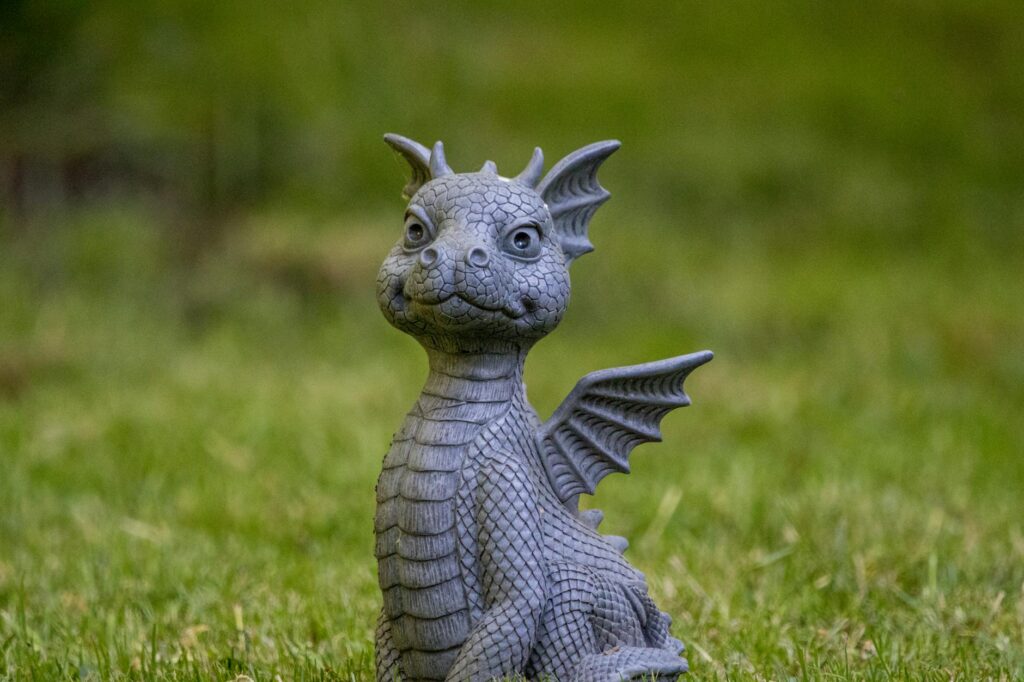
Join Mailing List
I don’t currently have this set up. Come back later and I will hopefully have a mailing list.